
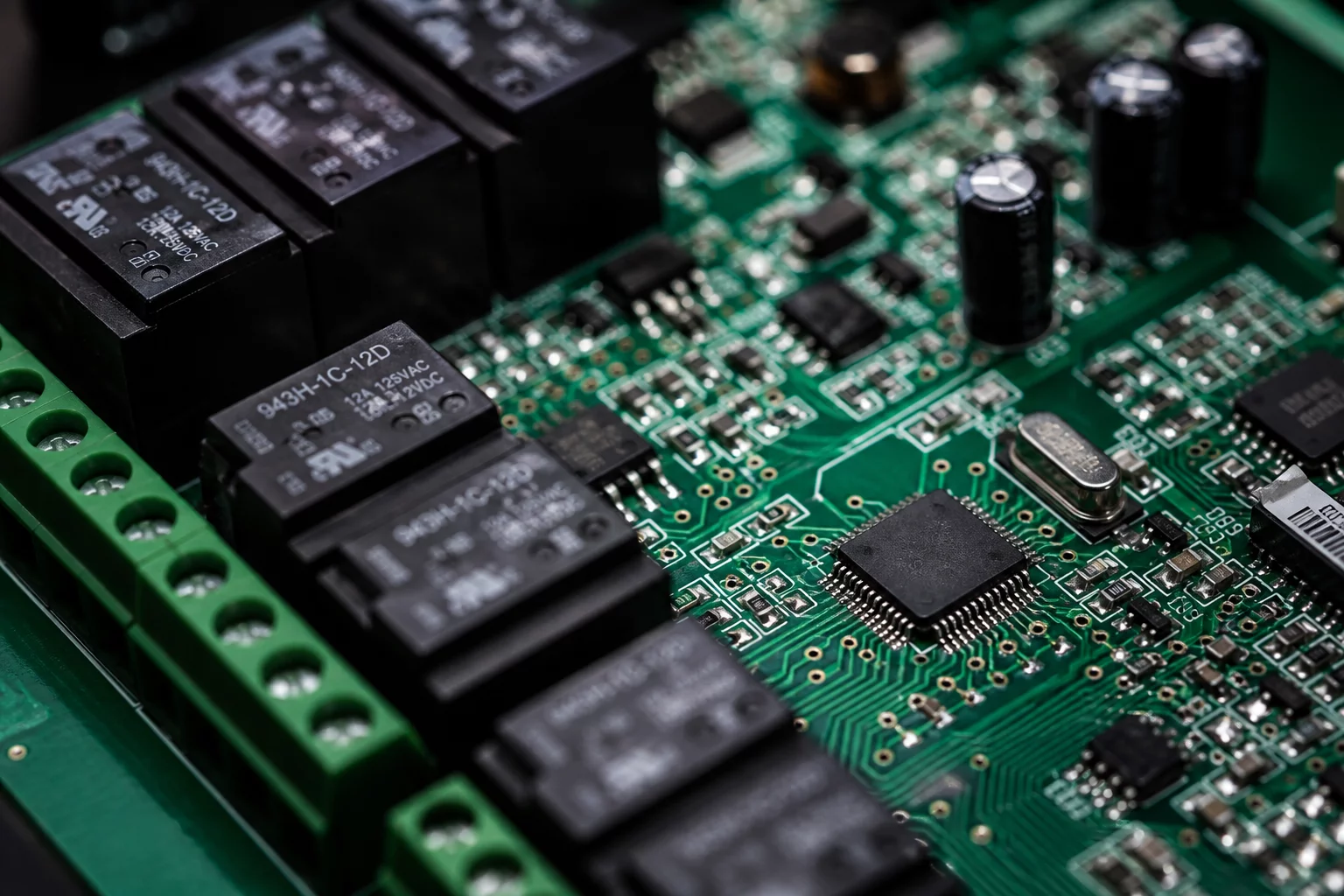
Advanced relay switching combines high-speed microcontroller logic with zero-crossing synchronization, eliminating contact wear while sustaining uninterrupted voltage stabilizer protection across broad power variations.
Operating Principles of Zero-Cross Relay Topologies
Conventional relay stabilizers historically encountered severe contact erosion due to high-energy electrical sparking when switching at random phases of the AC sine wave. Modern engineering resolves this vulnerability through dedicated phase-tracking circuitry. Microprocessors calculate the exact zero-crossing threshold and engage high-conductivity silver alloy contacts within a tight 4 to 8 millisecond interval. The resulting transformation delivers instantaneous step corrections without interrupting connected home machinery, sensitive audio systems, or medical diagnostic devices.
Delivers 4–10 ms tap transition via high-speed microprocessor zero-crossing sensing logic.
Minimizes contact degradation by 95% compared to conventional unmanaged electromagnetic relays.
Key Advantages for Residential and Commercial Networks
Solid-state managed relay configurations offer remarkable efficiency across an extensive input envelope between 90V and 270V. Unlike motorized mechanical servo brushes that encounter physical wear under frequent micro-surges, hermetically sealed relay modules operate quietly and endure millions of cycles without requiring maintenance or surface cleaning.
- Zero-crossing synchronization virtually eliminates mechanical contact burnout and internal line noise.
- High energy efficiency exceeding 98% during nominal grid operation with negligible heat dissipation.
- Multi-tap autotransformer topology provides immediate compensation during abrupt grid sags and spikes.